
As Western New York breaks away from the grip of a heavy winter, local homeowners look forward to the return of vibrant green spaces. Getting your yard ready for the season requires a strategic approach tailored specifically to our unique climate. Following a professional spring landscaping prep checklist for Clarence ensures your soil recovers from the aggressive freeze-thaw cycles and heavy snow cover typical of Erie County, setting the stage for a lush, healthy property all summer long.
When you tackle seasonal property maintenance in Clarence, timing is everything. Our proximity to Lake Erie can cause unpredictable early spring weather, meaning standard checklists written for other parts of the country won’t cut it here. This comprehensive guide outlines the exact steps needed to wake up your Western New York landscape safely and effectively.
1. The Post-Winter Ground Assessment
Before grabbing your tools, the first rule of early spring property management is patience. Walking on saturated, muddy soil compresses the ground, crushing fragile new grass roots and destroying the soil structure.
Check for snow mould and compaction.
Once the snowpack fully melts, walk your property boundaries to check for cold-weather turf issues. Western New York winters often leave behind pink or gray snow mould—a fungal condition that thrives under prolonged snow blankets. If you notice matted, web-like patches on your grass, a gentle raking with a plastic leaf rake will loosen the blades, improve airflow, and halt the fungal spread.
Address Hardscape Heaving
The intense freezing and thawing cycles in Clarence frequently cause soil shifting. Inspect your concrete walkways, paver patios, and retaining walls along your driveway or garden beds. Note any areas where stones have heaved or joints have separated. Catching these early prevents trip hazards and keeps minor shifts from turning into costly structural repairs.
Frequently Asked Questions
Q: When is it safe to start spring yard clean-up in Clarence, NY?
A: The ideal window typically opens in mid-to-late April. Wait until the ground is no longer squishy or waterlogged. Walking on wet, muddy lawns damages the soil structure and tears fragile, emerging root systems.
Q: Why is my hardscape walkway uneven after the winter?
A: Clarence experiences intense freeze-thaw cycles. When water gets under paver stones or concrete and freezes, it expands, pushing the materials upward (known as frost heaving). Once spring arrives, check these spots to ensure they settle back evenly. If they remain uneven, they may require a base repair to prevent tripping hazards.
2. Debris Clearance and Clean-Up
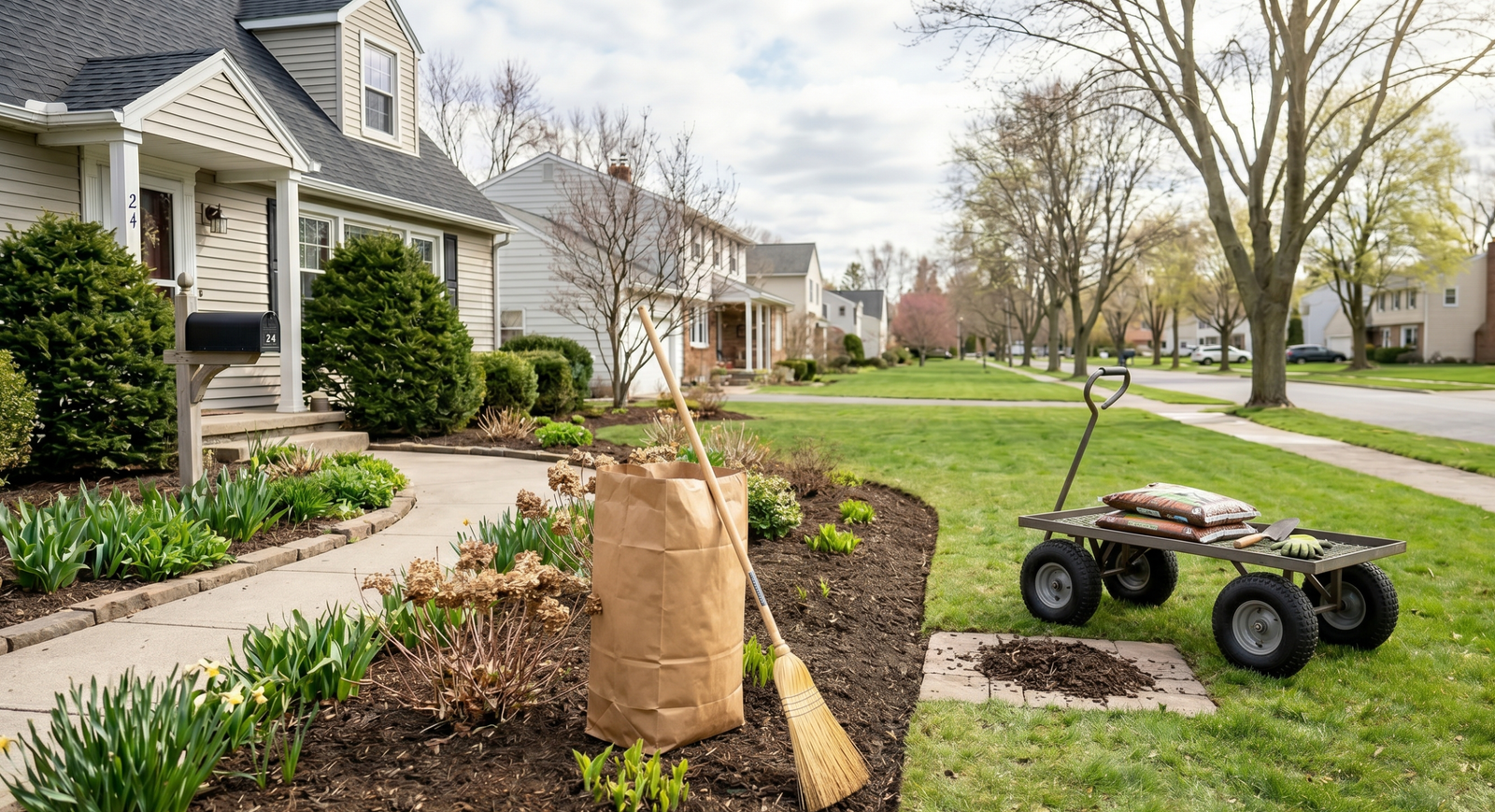
A clean canvas is essential for effective lawn care and landscaping. Winter storms leave behind a mess of organic matter that traps moisture and blocks vital sunlight.
- Clear Downed Limbs: Collect fallen branches, twigs, and pinecones scattered across the lawn.
- Rake Remaining Leaves: Matted leaves left over from late autumn will suffocate the turf beneath them if not cleared quickly.
- Clean Edges and Drainage Paths: Clear out roadside swales, ditches, and gutter downspout exit zones to ensure spring rain flows away from your home’s foundation.
Frequently Asked Questions
Q: How do I treat the gray or pink patches left on my grass after the snow melts?
A: Those patches are likely snow mould, a common cold-climate lawn fungus in Western New York. As soon as the lawn dries out, use a plastic leaf rake to gently fluff up the matted grass blades. This increases airflow, dries out the area, and stops the fungus from spreading without requiring heavy chemical treatments.
Q: Is it okay to leave last year’s fallen leaves in my garden beds?
A: Leaving a thin layer of leaves in your garden beds until local daytime temperatures consistently stay above 50°F is highly beneficial. It protects helpful pollinating insects overwintering in the debris. However, once the weather warms permanently, thick, matted leaf layers should be cleared out to avoid trapping destructive fungal moisture against plant stems.
3. Structural and Dormant Pruning
Pruning at the correct time stimulates healthy growth and safeguards your plants against local pests and plant diseases. In Clarence, early spring is the ultimate window to trim specific trees and shrubs before they break dormancy.
What to Prune Now
Focus on summer-blooming shrubs (like panicle hydrangeas or rose of Sharon) and deciduous shade trees. Remove dead, crossed, or storm-damaged branches to improve structural integrity and maximize sunlight penetration.
What to Avoid Pruning
Do not touch spring-blooming shrubs like lilacs, forsythia, or azaleas. These plants set their flower buds last year; pruning them now means cutting away this season’s blooms. Wait until immediately after they finish flowering in late spring to shape them.
Frequently Asked Questions
Q: What happens if I prune my spring-blooming shrubs too early?
A: If you prune shrubs like lilacs or forsythia in the early spring, you will accidentally slice off the flower buds that were set during the previous growing season. While it won’t kill the plant, it will completely ruin your spring floral display.
Q: Can I prune oak trees during a Clarence spring clean-up?
A: It is safest to avoid pruning oak trees from April through July to prevent oak wilt, a devastating fungal disease spread by beetles attracted to fresh pruning cuts. Heavy structural oak pruning should ideally be saved for the dead of winter when the trees are fully dormant and beetles are inactive.
4. Planting Bed Restoration and Mulching
The rich, dark loam found throughout parts of Clarence needs a little encouragement to deliver peak performance each spring.
Edging the Beds
Create deep, mechanical edges between your lawn and your landscape beds. A clean, 3-to-4-inch deep vertical edge not only gives your property a sharp, manicured look but also creates a physical barrier that keeps aggressive turfgrass roots from invading your garden spaces.
Cultivating and Amending Soil
Loosen compacted soil within your beds using a hand cultivator. Incorporate a layer of organic compost to reintroduce nutrients washed away by snowmelt.
Applying Fresh Mulch
Mulch is your best defence against early-season weed germination and summer moisture loss. Apply a 2-to-3-inch layer of premium double-shredded hardwood mulch.
Keep mulch away from the bark. Piling mulch directly against tree trunks or shrub stems—often called “volcano mulching”—traps moisture against the wood, which invites rot, wood-boring insects, and fungal diseases. Leave a 2-inch gap around the base of the plant.
Frequently Asked Questions
Q: What type of mulch is best suited for Western New York properties?
A: Premium double-shredded hardwood mulch or organic cedar mulch are excellent choices for our area. They lock together firmly to resist blowing away during heavy spring storms, naturally enrich the soil as they break down, and help maintain stable soil temperatures during summer heat waves.
Q: Do I need to remove old mulch before applying a fresh layer?
A: Not unless your total mulch depth exceeds three inches. If your existing mulch has broken down into healthy soil, you can simply cultivate it into the ground and lay down a fresh top layer. If mulch becomes too deep, it will prevent water and oxygen from reaching your plants’ roots.
5. Turf Optimization and Weed Prevention
A picture-perfect lawn doesn’t happen by accident in Western New York. It requires a carefully timed multi-step approach.
Core Aeration
If your lawn feels rock-hard or struggles with standing water, early spring core aeration can help. By pulling small plugs of soil out of the ground, aeration relieves compaction, letting oxygen, water, and nutrients sink straight down to the root zone.
The Power of Pre-Emergent Timing
Getting ahead of crabgrass requires precise timing linked directly to local soil conditions. Crabgrass seeds begin to germinate when soil temperatures consistently hit 55°F for several days. In our region, this window usually aligns with the blooming of local forsythia bushes. Applying a high-quality pre-emergent herbicide during this phase creates a protective shield in the soil, stopping weed seeds before they can take over your lawn.
Strategic Fertilization
Avoid the temptation to apply heavy nitrogen fertilizer at the very first sign of green grass. In early spring, a lawn naturally prioritizes root development. Forcing rapid top growth too early weakens the root structure. Wait until the grass is actively growing and has been mowed at least once or twice before applying a balanced, slow-release spring fertilizer.
Frequently Asked Questions
Q: When should I apply pre-emergent weed control for crabgrass in Erie County?
A: Look to nature for the perfect cue. When the bright yellow blooms open on local forsythia bushes, soil temperatures are approaching the 55°F threshold where crabgrass seeds germinate. Applying your treatment during this specific bloom window provides maximum seasonal protection.
Q: Can I seed my lawn and apply crabgrass preventer at the same time?
A: Generally, no. Standard pre-emergent weed controls cannot tell the difference between a crabgrass seed and a desirable grass seed—they will stop both from growing. If you need to fix bare patches in the spring, you must use a specialized starter fertilizer containing a selective pre-emergent safe for new seeds or delay your seeding until the early autumn.
Local Yard Care Planning Guide
To help you track your seasonal property updates, use this quick checklist categorised by early, mid, and late spring benchmarks in Clarence.
| Phase | Core Landscape Tasks | Focus Area |
| Early Spring (Late March / April) | Clear branches, rake out gray snow muld, inspect retaining walls, and execute dormant tree pruning. | Clean-up & Safety |
| Mid-spring (Late April / May) | Edge beds, apply compost, lay down a 2-inch mulch layer, and apply pre-emergent weed control. | Bed Care & Weed Defense |
| Late Spring (Late May / June) | Apply balanced lawn fertiliser, plant new perennials, and prune spring-blooming shrubs post-flower. | Growth & Nutrition |
Serving the Entire Clarence & Western New York Community
When looking for trusted property care, proximity matters. Homeowners searching for landscaping near me in Erie County need a team that can arrive promptly and understands the hyper-local soil variations of our distinct neighborhoods. We provide daily on-site landscaping and seasonal maintenance across all local sectors, including:
- Clarence Center: Caring for established properties along Goodrich Road and around the historic center.
- Harris Hill: Handling property clean-ups and hardscape restorations near Main Street and Wehrle Drive.
- Swormville: Providing comprehensive lawn care options near the Transit Road corridor.
- The Hollow & Local Subdivisions: Managing detailed mulching and drainage solutions for homes throughout the rolling hills and residential developments of the township.
Our Local Service Footprint
Below, you can interact with our live service map to check our location parameters, plan travel routes, or read real feedback from property owners right here in your neighborhood.
Partnering with Clarence Landscaping Experts
While many homeowners enjoy spending a sunny weekend working out in the yard, managing a full property revival can quickly become overwhelming. From operating professional aeration machinery to precisely timing pre-emergent applications, professional care saves time and prevents costly mistakes.
At Landscaping Clarence, we understand the nuances of Erie County’s soils, native plant selections, and climate patterns. Whether you need a comprehensive spring clean-up, ongoing lawn care management, or a complete landscape redesign, our local team brings the experience and professional equipment needed to unlock your property’s true potential.
Let us handle the heavy lifting so you can simply relax and enjoy a beautiful outdoor living space. Reach out to your local Clarence lawn care experts today to schedule your seasonal service or request a custom property walkthrough.