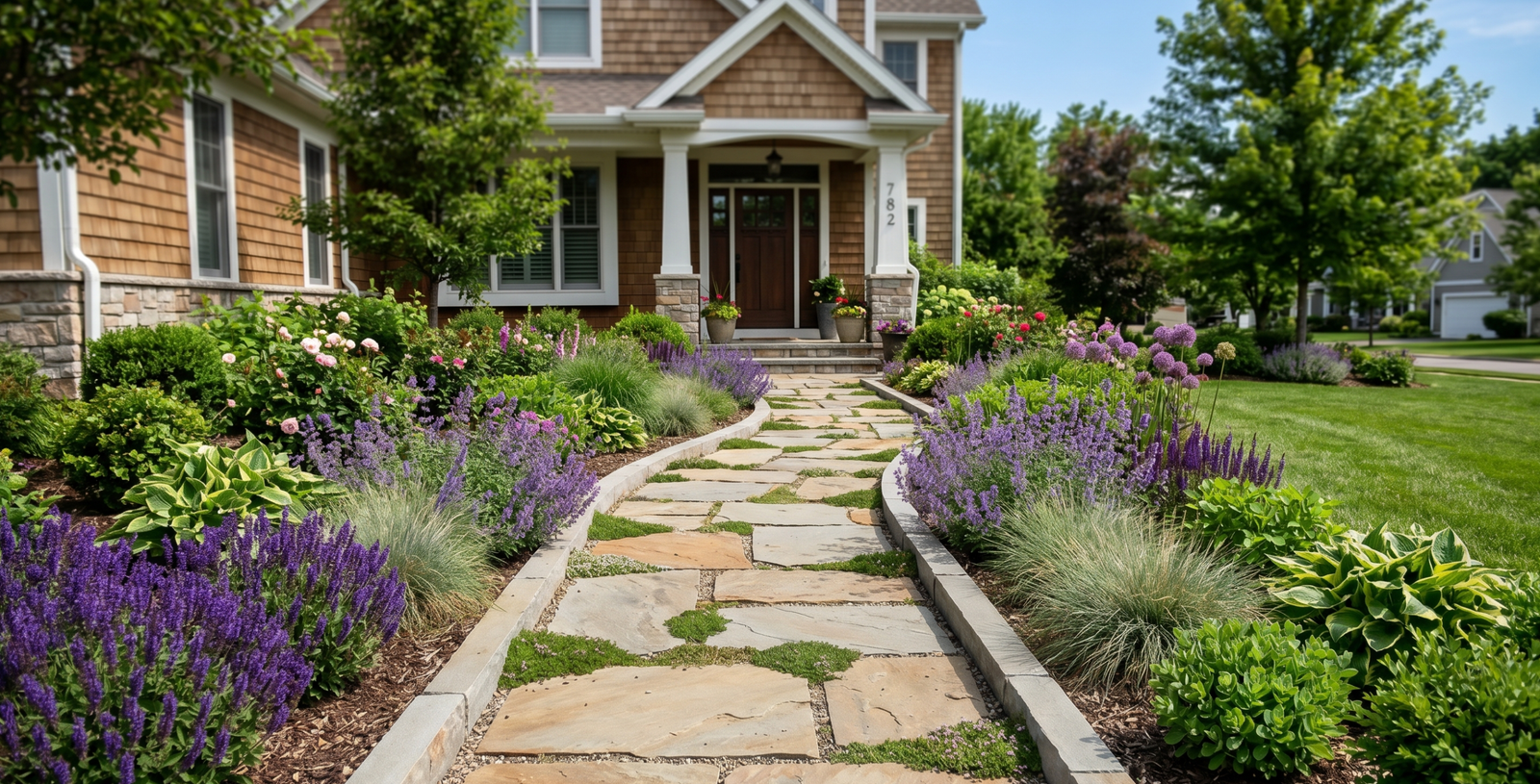

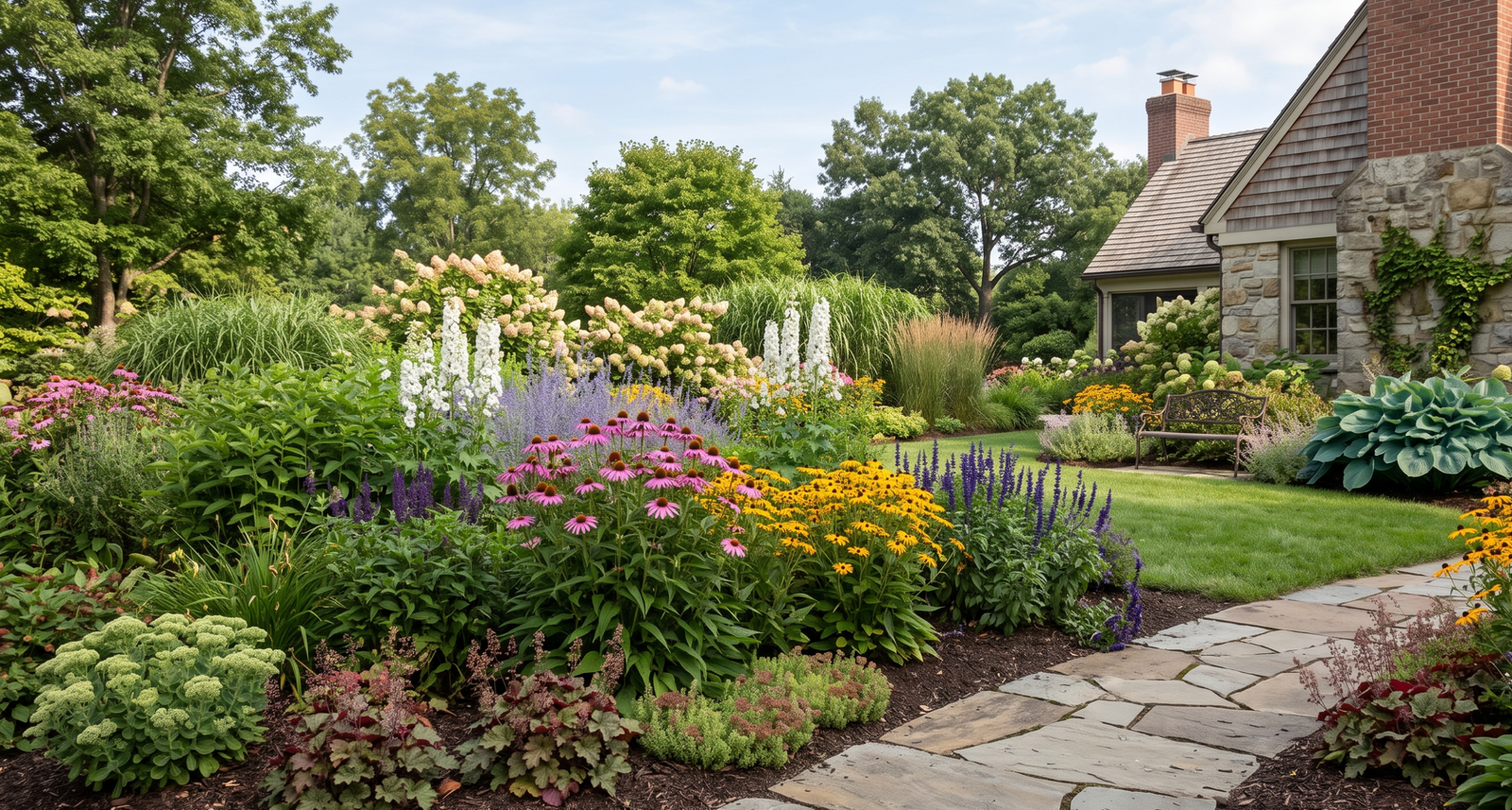
A breathtaking landscape does not happen by accident, especially in Western New York, where our weather can shift from a blazing July afternoon to a lake-effect blizzard in what feels like a heartbeat. For homeowners aiming to transform their properties, strategic perennial garden planning for Clarence Estates is the key to creating an enduring, multi-season masterwork that grows more beautiful year after year. By choosing long-lived plants that return each spring, you invest directly in your property’s curb appeal, reduce annual planting labor, and establish a local ecosystem that thrives naturally in our distinct climate.
When you design with a deep understanding of our unique geographic layout—from the limestone-rich soils along the Escarpment to the open, wind-swept lawns closer to Millersport Highway—your garden moves from a fragile collection of plants to a resilient, architectural landscape feature. Let’s look at what it takes to design, install, and sustain a premium perennial garden tailored specifically to Clarence, NY.
1. Understanding the Clarence Microclimate & Soil Footprint
To ensure your investment stands the test of time, we have to look closely at our local environment. Effective planning requires matching your plant choices with the physical realities of Western New York’s climate and earth.
The USDA Hardiness Zone Reality
Following the updated USDA plant hardiness guidelines, Clarence sits squarely within Zone 6b. This means our perennial selections must reliably tolerate winter lows down to -5°F without sustaining root damage. While it is tempting to pick up marginal exotic varieties at big-box retailers, a seasoned local hand knows that relying on true Zone 5 and Zone 6 hardy perennials is what ensures your beds look lush and full come May, rather than patchy and winter-burnt.
Decoding the Local Soil Profile
The earth beneath our feet in Clarence varies significantly depending on your neighborhood:
- The Limestone Escarpment: Properties near Main Street and the historic hollow often feature shallower, well-drained soils with an alkaline pH.
- The Low-Lying Plains: Heading north or south toward the transit corridors, you are more likely to encounter heavy, moisture-retentive clay that can suffer from poor drainage during the heavy spring thaws.
Before turning over a single spade of dirt, we highly recommend conducting a basic soil test or having a regional specialist assess your site’s drainage. Amending clay-heavy pockets with organic leaf compost and aged manure are crucial steps that prevent root rot and ensure your perennials establish deep, drought-resistant root structures.
Frequently Asked Questions
Q: Can I use Zone 7 plants if I plant them close to my house?
A: Planting near a brick foundation creates a small “microclimate” that traps heat, but it is a gamble in Erie County. An intense winter breeze or an extended freeze can still kill the roots of Zone 7 plants. It is much safer to use Zone 7 varieties in moveable containers rather than in permanent estate beds.
Q: How do I know if my estate bed has a clay or limestone soil profile?
A: If water pools on your lawn for hours after a heavy rainfall, you are likely dealing with a dense clay profile. If water drains away instantly but your soil looks pale and rocky, you are sitting closer to the limestone escarpment line.
2. Design Principles for High-End Estates
An estate-scale garden demands a sense of proportion and structure that smaller suburban plots rarely require. Instead of scattered, disconnected patches of color, a premium layout relies on clean lines, repetitive visual rhythms, and vertical layering.
Designing for Continuous Bloom Success
The common pitfall in amateur planning is the “June Crash”—a garden that looks spectacular for three weeks in early summer and transitions into an uninspired sea of plain green for the rest of the year. To avoid this, we map out a strict bloom timeline across four distinct phases:
| Season | Anchor Perennials | Visual Role |
| Early Spring | Creeping Phlox, Bleeding Hearts (Dicentra spectabilis), Hellebores | Provides the first wave of vibrant color as the ground warms up. |
| Mid-Summer | Hybrid Delphiniums, Bearded Iris, Salvia, Peonies | Offers dramatic vertical interest and dense, romantic textures. |
| Late Summer | Purple Coneflower (Echinacea), Black-Eyed Susans, Russian Sage | High-endurance color that withstands intense heat and sun. |
| Autumn Landscape | New England Asters, Joe-Pye Weed, Ornamental Switchgrass | Brings rich jewel tones and structural silhouettes that catch the frost. |
Architectural Layering and Proportions
To create a sense of depth against expansive backdrops or sweeping brick facades, use a classic three-tiered structure:
- The Background (The Anchors): Tall, structural varieties like Baptisia (False Indigo) or Joe-Pye Weed that reach 4 to 6 feet in height, serving as a living backdrop.
- The Mid-Border (The Showstoppers): Mid-height fillers such as coneflowers, dramatic hostas, and structural salvias that weave the colors together.
- The Foreground (The Edgers): Low-growing ground covers like Heuchera (coral bells) with striking purple foliage or creeping sedums to soften stone walkways and patios.
Frequently Asked Questions
Q: How wide should my estate’s perennial borders be?
A: For larger properties, aim for a border depth of 5 to 8 feet. This width gives you enough physical room to layer plants from front to back, creating a lush, professional depth that narrow 3-foot beds cannot achieve.
Q: What is the best way to prevent a large garden from looking messy?
A: Repetition is the secret. Instead of planting one of every variety, plant identical perennials in repeating groups of three, five, or seven. This anchors the eye and makes the landscape look intentionally designed rather than cluttered.
3. Top Perennial Performers for Clarence Landscapes
Selecting the right plants means choosing varieties that possess a natural resistance to local pests—such as our active white-tailed deer populations—and can handle our variable moisture levels.
Native Powerhouses for Sun and Pollinators
Integrating native species isn’t just an ecological choice; it’s a practical, low-maintenance strategy. Native perennials have spent thousands of years adapting to Western New York’s weather cycles.
- Purple Coneflower (Echinacea purpurea): An absolute sun-lover that stands up to mid-July dry spells. Its rigid stems keep it upright without staking, and local goldfinches love feeding on the dried seed heads during early winter.
- Black-Eyed Susan (Rudbeckia fulgida): Offers a blanket of golden-yellow color from July straight through September. It pairs beautifully with cool-toned blue salvias.
- Swamp Milkweed (Asclepias incarnata): An excellent pick for lower, wetter spots on your property, acting as an essential host plant for monarch butterfly caterpillars.
Elegant Solutions for Shady Borders
Many beautiful properties in Clarence feature mature oak and maple canopies that cast deep shade. Rather than fighting the shade with struggling turfgrass, embrace it with a luxurious shade gallery or consult a pro for specialized lawn care tips designed for low-light yards.
- Hosta Varieties: Cultivars like ‘Sum and Substance’ bring massive chartreuse leaves that fill wide spaces, while blue-toned options like ‘Halcyon’ resist slug damage and add a cool, velvety texture to dark corners.
- Astilbe (False Spirea): Features feathery, plume-like flowers in shades of pink, red, and white that light up damp, shaded woodland borders in mid-summer.
- Japanese Forest Grass (Hakonechloa macra): A slow-growing, cascading ornamental grass that looks like a waterfall of bright golden-green foliage along shaded stone walls.
Frequently Asked Questions
Q: Are there any beautiful perennials that local deer completely ignore?
A: While a hungry deer will taste almost anything, they strongly dislike aromatic herbs and fuzzy textures. Plants like Russian sage, alliums (ornamental onions), salvia, and bleeding hearts are highly deer-resistant choices for local yards.
Q: Will Hostas survive under black walnut trees?
A: Yes! Black walnuts produce a chemical called juglone that kills many plants, but Hostas, Astilbes, and many native ferns are completely tolerant of it, making them perfect for woodland estate borders.
4. Step-by-Step Installation & Site Preparation
A garden is only as good as the foundation you build for it. Skipping the preparation phase means fighting weeds and compacted earth for years to come.
- Define and Clear the Borders: Early Spring.
Use a flexible garden hose to layout natural, sweeping curves for your borders. Avoid sharp angles, which are difficult to navigate with a lawnmower. Remove all existing turfgrass using a sharp spade or sod cutter, ensuring you lift the roots of invasive weeds.
- Soil Cultivation and Amending: 1-2 Weeks Before Planting.
Till or turn the soil down to a depth of 12 inches. Broadcast a 3-inch layer of high-grade organic compost across the entire bed. If your soil test indicates heavy, dense clay, incorporate coarse leaf mold to create essential macropores for air and water movement.
- Layout and Placement: Planting Day.
Before removing the perennials from their nursery pots, arrange them across the bed according to your design plan. Walk back and view the layout from your windows and patio to ensure the spacing looks balanced and that taller plants do not block shorter varieties.
- Planting and Deep Watering: Immediate Aftercare.
Dig holes twice as wide as the nursery root ball. Gently loosen any circling roots, place the plant so the crown sits level with the surrounding soil, and backfill firmly. Immediately apply a thorough, deep soaking to eliminate air pockets around the fresh roots.
A Note on Mulching: Apply a clean, 2-inch layer of double-shredded hardwood mulch over your open soil. Keep the mulch pulled back an inch away from the base of plant stems to avoid trapping moisture against the bark, which can cause fungal disease.
Frequently Asked Questions
Q: When is the best time of year to install a large perennial bed in Clarence?
A: Early spring (late April through May) and early autumn (September) are the golden windows. The mild temperatures and frequent seasonal rains reduce transplant shock, allowing roots to establish before summer heat or winter freezes arrive.
Q: Should I use weed barrier fabric under my mulch?
A: We do not recommend weed fabric in high-quality perennial beds. It prevents creeping perennials from spreading naturally and restricts air exchange, and over time, blowing weed seeds will simply sprout right on top of the fabric anyway. Rich organic mulch is a much better long-term choice.
5. Finding a Certified Landscape Contractor Near Me
When searching for an experienced landscape contractor near me to handle large-scale installations, proximity and localized expertise are critical. A premium botanical design requires heavy material moving, precision soil grading, and specialized sourcing networks that national operators simply cannot duplicate.
By choosing a dedicated local service provider based right here in Erie County, you ensure your project is supervised by a team that understands local municipal codes, environmental conditions, and neighborhood guidelines perfectly.
Serving Our Local Clarence Neighborhoods
Our local service crews provide custom design, soil optimisation, and architectural planting installations throughout the region, with rapid deployment to our immediate service corridors:
- The Hollow & Historic Main Street District: Navigating shallow limestone soils and executing historic architectural preservation alignments.
- Spaulding Lake & Harris Hill: Designing sweeping, high-visibility residential borders that blend seamlessly with elegant brick work and water features.
- Swormville & Northern Clarence: Correcting heavy clay layers and optimizing drainage networks for open, sun-exposed acreage along Transit Road.
Interactive Location & Driving Directions
To verify our proximity and service coverage across town, please refer to our active service map below. You can calculate direct route timing from your property to our central office coordinates to check availability for emergency drainage assessments or planting consultations.
Frequently Asked Questions
Q: Why should I choose a neighborhood landscape contractor instead of a large regional chain?
A: Regional chains use broad, non-specific plant palettes. A neighborhood professional knows exactly how a cold wind off Lake Erie or a low-lying clay shelf on your specific street will affect a plant. We source from nearby growers whose plants are already hardened to our climate.
Q: Do you service properties just across the town line in Amherst or Williamsville?
A: Yes. Our main operational hub is situated to service Clarence natively, but our trucks run daily routes throughout Williamsville, East Amherst, and Lancaster.
6. Partnering with Local Professionals
Executing a large-scale estate installation requires specialized equipment, deep regional sourcing networks, and significant manual labor. Partnering with a dedicated service like Clarence Landscaping ensures your project is handled seamlessly from concept to reality.
Our crew lives and works right here in Erie County, meaning we understand how to navigate local zoning requirements, choose cultivars that actually survive Western New York winters, and complete installations cleanly without disturbing the rest of your turf or hardscape features. From managing extensive site grading and installing hidden drip irrigation networks to sourcing specimen-grade plants from trusted regional growers, we bring the practical field experience required to transform your outdoor space into a striking, low-maintenance retreat.
Frequently Asked Questions
Q: How long does it take for a newly installed professional perennial garden to look full?
A: There is an old gardening adage for perennials: “The first year they sleep, the second year they creep, the third year they leap.” Expect your garden to look beautifully manicured in year one, well-filled in year two, and stunningly mature by year three.
Q: Does Clarence Landscaping offer seasonal maintenance or fall cleanups for these gardens?
A: Absolutely. We provide comprehensive seasonal care packages, including spring cleanups, selective structural pruning, division of mature perennials, and winterization steps to protect your landscaping investments over the colder months.
Ready to bring your dream garden to life? Reach out to your neighborhood specialists at Clarence Landscaping today to schedule an on-site property evaluation, and let’s start mapping out a beautiful perennial layout for your home.