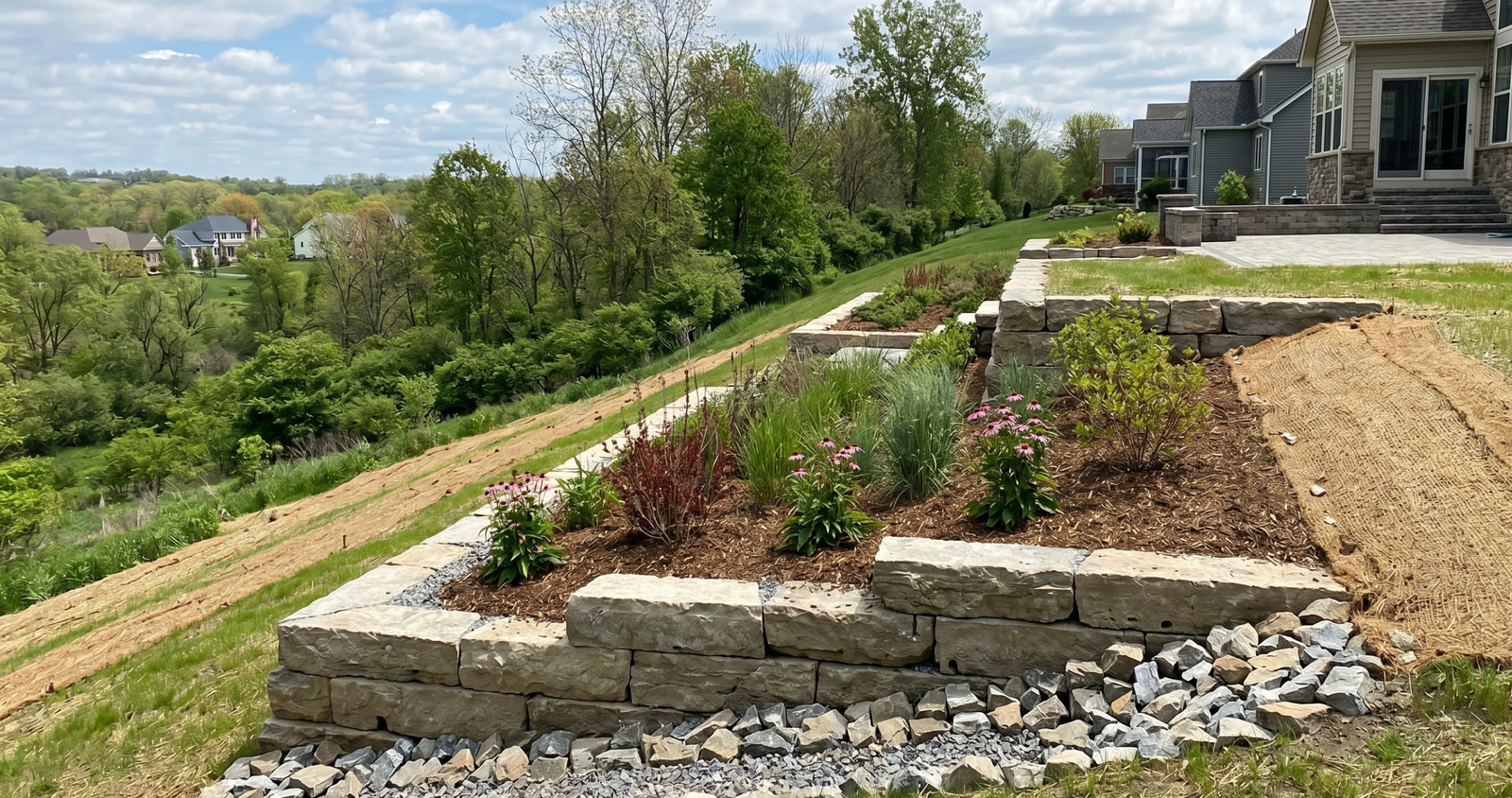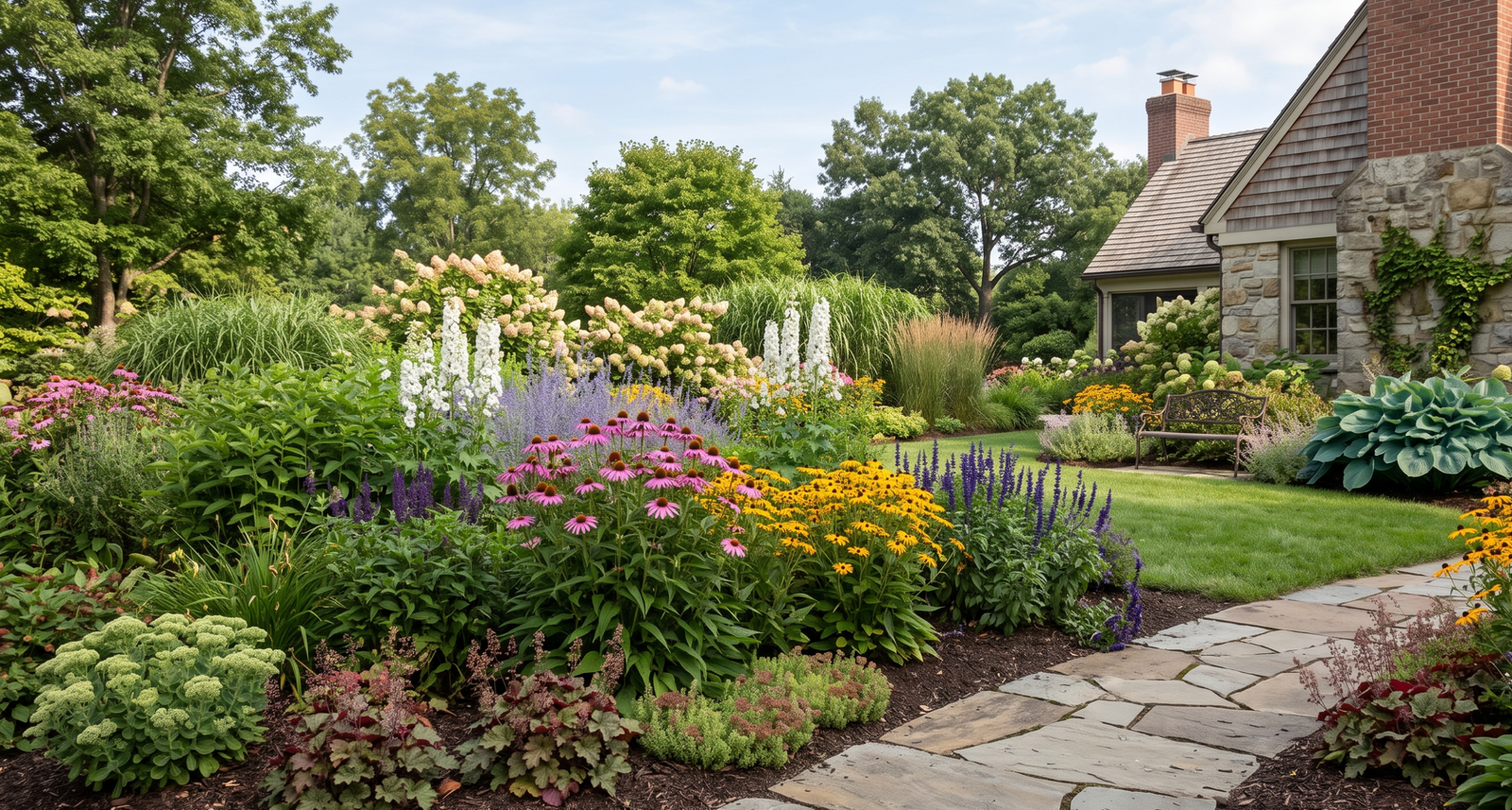

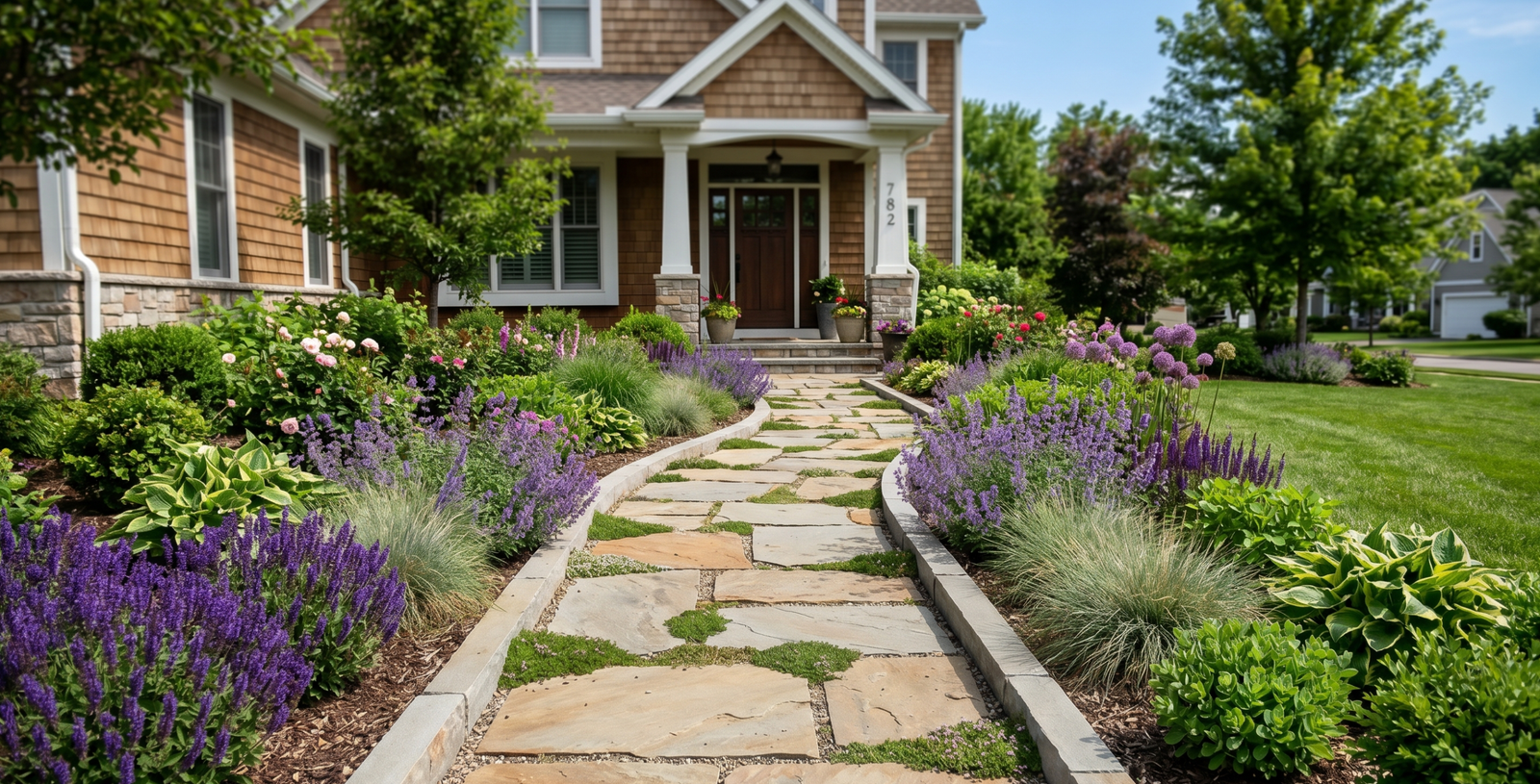
A meticulously designed landscape transforms a house into a home, but nothing bridges the gap between raw nature and architectural elegance quite like well-planned hardscaping. For homeowners looking to elevate their outdoor spaces, designing elegant garden paths and walkways is the definitive strategy to establish visual flow, safe navigation, and sophisticated focal points. Beyond simply keeping your feet out of the mud, a high-end walkway dictates how guests experience your property—slowing down the pace to admire a perennial bed or guiding the eye directly toward an inviting outdoor living space. As the premier choice for professional landscape design and implementation, our team combines local structural expertise with artistic mastery to curate stunning transitions that thrive in our specific Western New York climate.
When you establish clear foot traffic patterns through premium stonework, you do not just upgrade your daily walk to the mailbox; you fundamentally increase your property value and curb appeal. Let’s break down the exact strategies, materials, and structural engineering techniques required to construct elegant garden pathways that endure beautifully for decades.
Frequently Asked Questions
Q: How wide should a standard front walkway be compared to a backyard garden path?
A: Front entry walkways should be a minimum of 4 to 5 feet wide to allow two people to walk comfortably side-by-side. Backyard paths or secondary garden trails can be narrower, typically ranging between 2 to 3 feet wide, favoring a single-file, relaxed pace.
Q: Should a walkway be perfectly straight or curved?
A: It depends entirely on the purpose. Straight walkways work best for formal entries and direct, practical routes where efficiency matters. Curved pathways look more organic, visual, and casual, making them perfect for navigating flower beds or creating a relaxed backyard journey.
1. Navigating Design Intent: Form Meets Function
Before laying a single stone, a professional landscape designer analyses the intended choreography of your outdoor space. Walkways generally fall into two distinct structural and psychological categories, which must be systematically aligned with your yard’s architecture.
Primary vs. Secondary Walkways
- Primary Pathways (The Direct Routes): These are your high-traffic conduits—such as the path leading from your driveway to the front entry or a direct connection from the back deck to the patio. These installations require a minimum width of 4 to 5 feet. allowing two individuals to walk comfortably abreast. They dictate absolute structural stability, favoring flat, uniform, highly durable hardscape materials that accommodate frequent foot traffic, strollers, and seamless snow clearance during severe winter conditions.
- Secondary Pathways (The Meandering Journeys): These paths lead to intimate backyard features, such as a hidden fire pit, a secluded water feature, or a vegetable garden. Averaging a modest 2 to 3 feet in width, these tracks invite casual, single-file exploration. They are the ideal candidates for sweeping, organic curves, rustic natural materials, and playful spacing that encourages visitors to slow down and take in the surrounding plant life.
Frequently Asked Questions
Q: Which material lasts longer in cold climates: natural flagstone or concrete pavers?
A: Both offer incredible longevity if installed on a proper sub-base. However, high-quality architectural concrete pavers are specifically engineered with lower water-absorption rates than some natural stones, making them highly resistant to chipping or cracking from severe freeze-and-thaw cycles.
Q: Are gravel and aggregate paths high maintenance?
A: Aggregate paths require a bit more upkeep than solid stone. They may need periodic weeding, raking to keep the stones level, and a top-off of fresh gravel every few years. Using solid stepping stones embedded in the gravel helps minimize gravel displacement.
2. Material Selection Engineered for Elegance and Longevity
The material you select defines the texture, color palette, and overall architectural era of your home. However, looks are only half the battle. In region-specific landscape design, material density and water-absorption rates dictate how gracefully your path handles the seasons.
Premium Bluestone and Flagstone
Natural flagstone—particularly deep, full-color range Appalachian bluestone—remains the pinnacle of classic elegance. Its irregular, organic shapes lend a timeless, “cottage-garden” aesthetic, while its naturally textured surface provides natural slip-resistance. For a more formal, contemporary look, dimensional flagstone cut into crisp rectangles and squares offers clean lines that complement modern architectural designs.
Architectural Concrete Pavers
Modern interlocking pavers have revolutionised hardscaping. Manufactured under extreme pressure, premium pavers boast a density far exceeding standard poured concrete, making them incredibly resistant to salt damage and moisture penetration. Available in textures that replicate everything from historic European cobblestones to clean, linear slate slabs, architectural pavers allow for endless pattern variations, including herringbone, running bond, and modular mosaics.
Aggregates and Stepping Stones
For secondary woodland trails or low-traffic garden transitions, blending aggregates with large stepping stones creates a softer visual footprint. Combining large, hand-selected slate steppers with a bed of fine pea gravel or clean river rock provides excellent rainwater permeability. It’s a design choice that looks entirely organic while keeping your feet elevated and dry.
Frequently Asked Questions
Q: Why is geotextile fabric necessary under a walkway foundation?
A: Geotextile fabric acts as a separation barrier. It prevents the heavy native clay soils below from mixing with your clean, structural crushed stone base. Without it, the stones sink into the mud over time, causing the walkway surface to shift and become uneven.
Q: How do you prevent weeds from growing between the path stones?
A: We prevent weed growth by filling the joints with advanced polymeric sand. When hydrated, this specialized sand hardens into a strong, flexible seal that locks out windblown weed seeds and resists water erosion, while still allowing the path to flex with ground movement.
3. The Anatomy of an Enduring Walkway: Proper Site Preparation
An elegant walkway is only as good as the hidden foundation beneath it. Without precise subterranean engineering, the freeze-and-thaw cycles common in the Northeast can easily ruin a beautiful hardscape, leading to shifting, tripping hazards, and standing water.
Here is the exact structural methodology applied during a professional installation to ensure your investment stands perfectly level year after year:
+————————————————————-+
| Hardscape Material (Pavers / Stone) | <- Surface Level
+————————————————————-+
| 1″ Clean Bedding Sand / Fine Angular Aggregate | <- Leveling Layer
+————————————————————-+
| 4″ to 6″ Compacted Crushed Stone Base (Item 4 / Sub-base) | <- Load-Bearing Foundation
+————————————————————-+
| Woven Geotextile Fabric Class 1 | <- Soil Separation Barrier
+————————————————————-+
| Excavated Subgrade | <- Solid, Unaffected Soil
+————————————————————-+
The Construction Phase Step-by-Step
- Excavation and Grading: The path is excavated down 6 to 8 inches below the target finish grade. The subgrade is carefully sloped at a minimum 1-2% pitch away from any home foundations to guarantee flawless surface water drainage.
- Geotextile Membrane Integration: A heavy-duty geotextile fabric layer is laid across the raw earth. This vital barrier prevents the native clay soils from migrating up into your clean stone base over time, eliminating localized sinking and subgrade failure.
- The Aggregate Base: A 4-to-6-inch layer of crushed, angular runstone (typically Item 4) is installed in controlled 2-inch increments. Each layer is intensely vibrated using a mechanical plate compactor to create an unyielding, load-bearing foundation that handles shifting ground effortlessly.
- Bedding and Setting: A precise 1-inch sharp bedding sand layer is screeded over the compacted stone base. The pavers or natural stones are carefully set by hand, establishing tight, uniform joints.
- Edge Restraints and Joint Stabilisation: Heavy-duty commercial restraints are secured along the borders to prevent the path from shifting outward under pressure. Finally, advanced polymeric sand is swept into the joints and hydrated, locking the stones together in a flexible, weed-resistant, erosion-proof seal.
Frequently Asked Questions
Q: What are the best low-profile plants to grow directly between stepping stones?
A: Creeping Thyme (Thymus serpyllum) and Irish Moss (Sagina subulata) are excellent choices. They stay short, tolerate light foot traffic well, and add an organic, living texture to the stone gaps.
Q: How close should large landscape plants or shrubs be placed to a walkway?
A: Shrubs should be planted far enough back to account for their mature width. A good rule of thumb is to take half of the plant’s expected full adult width and place the root ball at least that far away from the edge of the hardscape to avoid overgrown pathways later.
4. Architectural Borders and Living Accents
An exceptional walkway doesn’t stop at its edge; it transitions gracefully into the surrounding landscape. Softening the hard lines of a new stone installation with intentional botanical framing bridges the gap between stonework and organic growth.
Softscape Transitions
Planting dense, low-profile groundcovers along your walkway borders creates an immediate, established look. For stepping stone paths, allowing creeping varieties like Thymus serpyllum (Creeping Thyme) or Sagina subulata (Irish Moss) to carpet the gaps provides a striking visual contrast and releases a pleasant aroma when stepped on. For main paver walkways, framing the hardscape with layered perennials—such as deep purple Lavandula (lavender), structured Nepeta (catmint), and soft ornamental grasses—adds dynamic motion and color that frames your path through every season.
Frequently Asked Questions
Q: Why does the local soil profile in Western New York require deeper walkway excavation?
A: Much of our local soil contains dense, moisture-retaining clay. When winter frost hits, wet clay expands significantly. Excavating deeper and replacing that clay with a thick, well-draining crushed stone base gives the ground room to breathe and prevents the path from buckling.
Q: Can I use chemical ice-melters on a brand-new paver walkway during the winter?
A: It is best to avoid aggressive chemical de-icers and rock salt on new walkways, especially during the first year, as they can degrade the stone surfaces. Instead, opt for clean sand or specific paver-safe ice-melt alternatives to ensure long-term surface protection.
5. Local Expertise for Western New York Estates
Designing walkways in our region requires deep familiarity with local soil profiles and weather realities. Property lines throughout the Town of Clarence, NY—stretching from the historic hollow up to the sweeping landscapes near Main Street and Gunnville Road—often feature unique variations of dense, moisture-retentive clay soils and shallow limestone shelves.
Town of Clarence Geographic Hardscape Realities:
– Northern Subgrade: High clay retention -> Requires deeper aggregate base prep.
– Southern Escarpment: Shallow limestone beds -> Requires specialized shallow-depth grading.
– Weather Profile: Rapid freeze-thaw cycles -> Demands strict polymer sand joint stabilization.
Because our local weather patterns move rapidly from humid summer downpours to heavy winter snow loads, generic building techniques simply won’t hold up. Our local landscape designs integrate deeper sub-base aggregate depths and advanced polymer joint compounds engineered specifically to withstand regular frost-heaving. By ensuring every project strictly coordinates with local grading requirements and respects native drainage patterns, we construct breathtaking, durable outdoor walk spaces tailored explicitly to the homes of Erie County.
Frequently Asked Questions
Q: How can I find a reliable walkway installer near me?
A: Look for local hardscape specialists with proven regional experience who understand specific township codes and winter structural engineering needs. Hiring a specialist based in your immediate area ensures rapid site assessments and a deep knowledge of native soil behaviors.
Q: Do you manage local clearing permits for municipal right-of-way pathways?
A: Yes. Our team handles the local municipal requirements and zoning codes for any sidewalk or driveway apron transitions that connect directly to town-maintained roadways.
6. Finding Trusted Walkway Specialists Near Me
When investing in premium property upgrades, finding an experienced, elite hardscaping team near me ensures that your project is constructed to withstand our unique Western New York soil profiles and weather shifts. Our physical service operations are deeply embedded in the local landscape, allowing us to deliver rapid, hands-on quality control from design through to final joint stabilization.
+———————————————————————————-+
| OUR HYPER-LOCAL SERVICING REGION & POSTAL FOOTPRINT |
+———————————————————————————-+
| Primary Hub: Clarence, NY 14031 | Clarence Center, NY 14032 |
| |
| Extended Service Corridors: |
| – Williamsville, NY 14221 (Near SUNY Buffalo North Campus & Millersport Hwy) |
| – East Amherst, NY 14051 (Transit Road residential footprint) |
| – Lancaster, NY 14086 & Depew, NY 14043 (Southern service tier) |
| – Akron, NY 14001 & Newstead (Eastern rural estate service tier) |
+———————————————————————————-+
By concentrating our service fleet within these specific geographic boundaries, we can guarantee responsive project management and localized support that distant national networks simply cannot match. Whether your property sits near the busy intersections of Sheridan Drive and Transit Road or out past the scenic reaches of the Clarence Escarpment, our crews are regularly operating right in your neighborhood.
Ready to Elevate Your Landscape Architecture?
Whether you are envisioning a sweeping bluestone path through a blooming backyard retreat or a formal paver walkway to maximise your home’s curb appeal, professional design execution makes all the difference. Our dedicated local artisans are ready to bring your vision to life with unparalleled structural engineering and artistic execution.
Schedule a Design Consultation
- Our Service Hub: Proudly serving Clarence, NY 14031, Clarence Center, and the surrounding Western New York communities.
- Get in Touch: Reach out to our landscape design team today to request a comprehensive on-site consultation. Let’s map out a customised hardscape solution that showcases your personal style while drastically increasing your home’s long-term market value.
Find Us in the Community
To check driving distances to our central operations, browse our service portfolio, or read verified local reviews from property owners in your immediate neighborhood, interact with our official map entity below