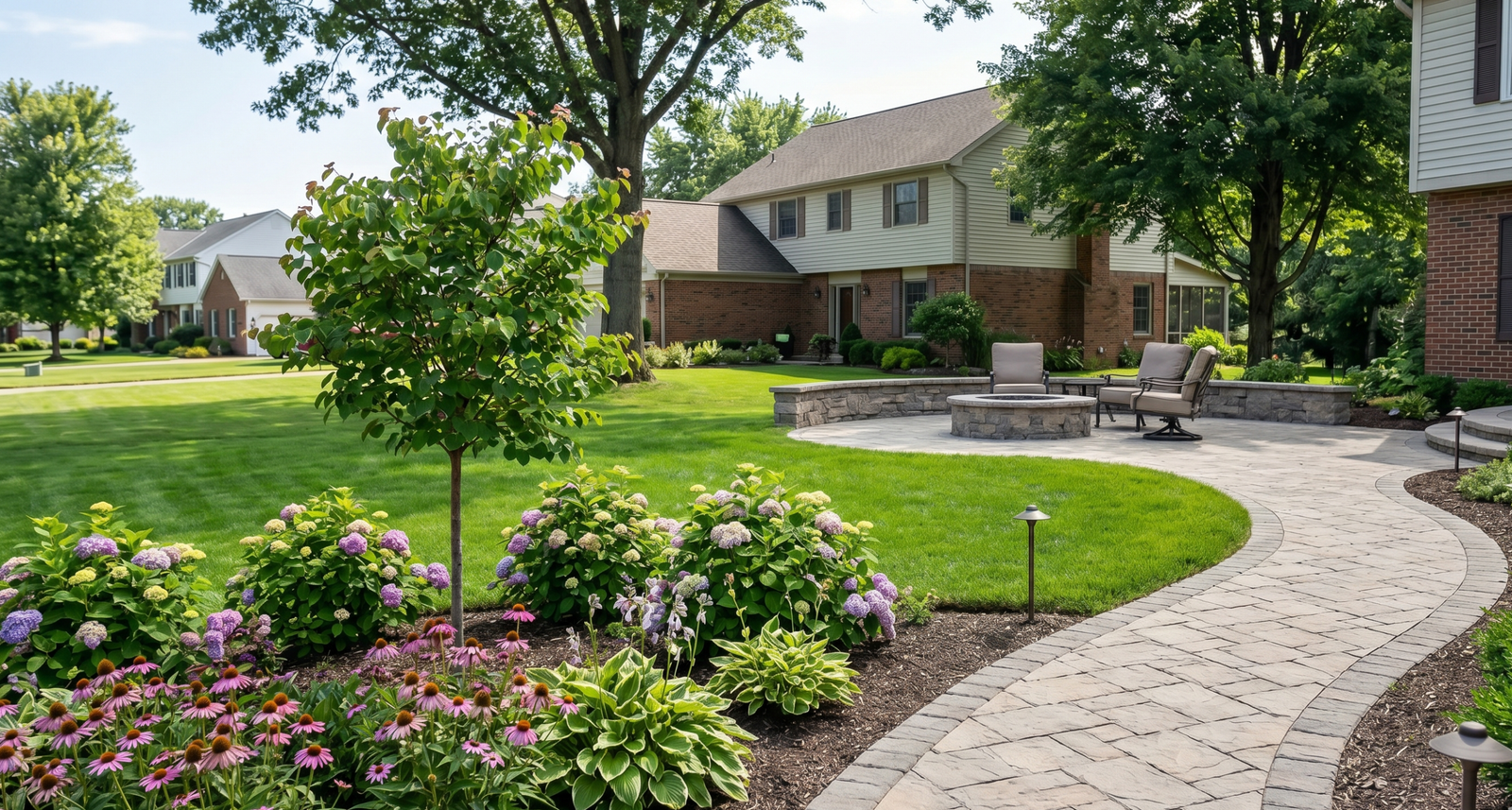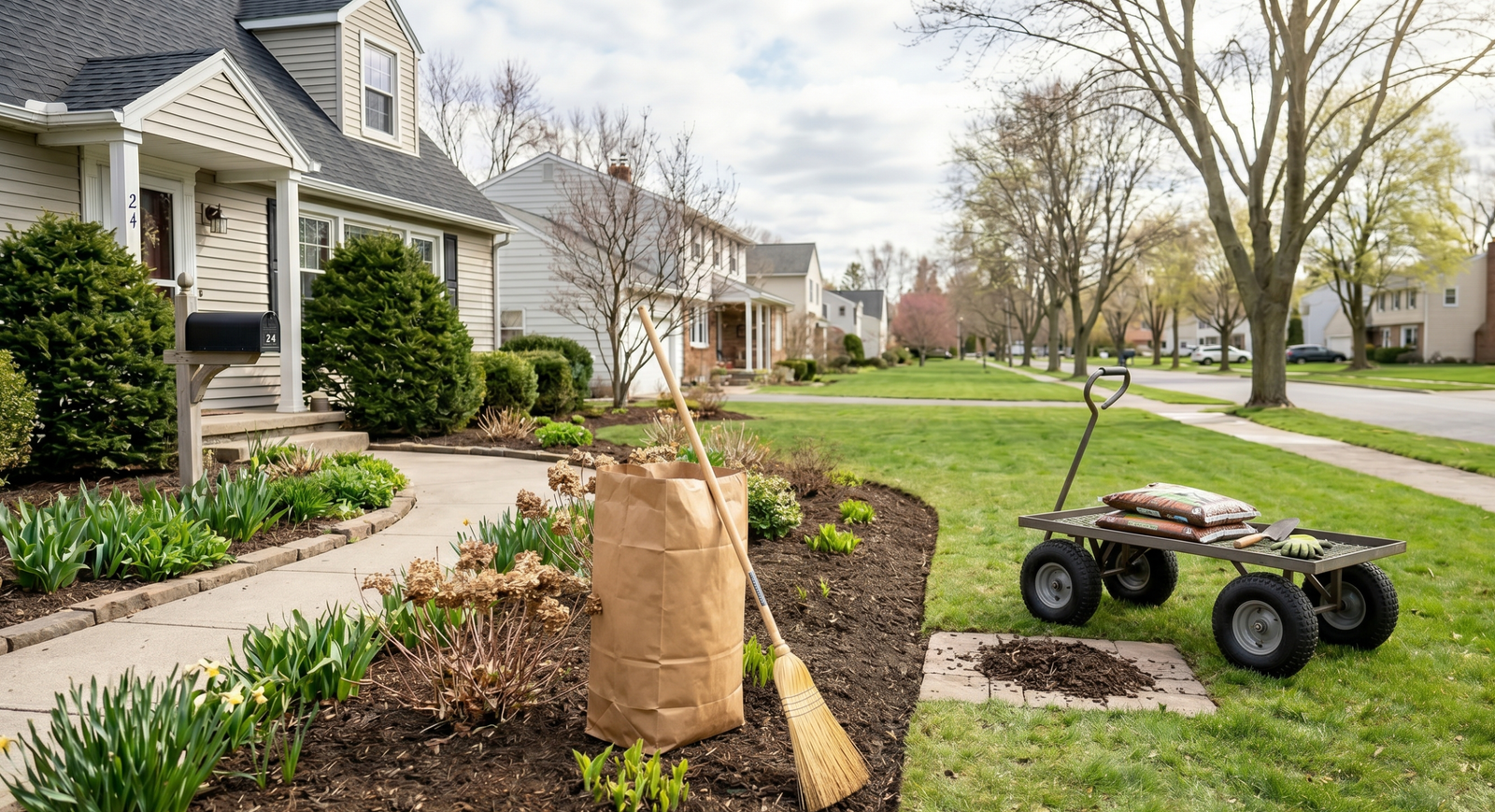

Clarence, New York, features a unique mix of spacious properties, rolling suburban lawns, and historic charm. From the sprawling developments near Transit Road to the larger, tree-lined properties along Hunts Corners and baseline roads, homeowners share a common desire: turning their backyards into personal sanctuaries. Partnering with a professional team for custom residential landscape design in Clarence ensures your investment fits your property’s exact layout.
As neighborhoods grow and new constructions pop up, achieving true backyard privacy has become a top priority. However, building a standard stockade fence isn’t always the ideal solution. Local zoning laws, aesthetic preferences, and the distinct Western New York climate require a more natural, sophisticated approach.
This guide breaks down the most effective living privacy screens and structural design combinations tailored specifically for Clarence lots.
Frequently Asked Questions
Q: Why should I choose a living privacy screen over a standard vinyl or wood fence? A: Living screens offer a softer, more natural look that complements the open feel of Clarence neighborhoods. Unlike solid fences, they don’t block airflow, they naturally dampen neighborhood noise, and they are rarely subject to the strict height limitations town zoning places on structural fences.
Q: Can I combine a living screen with a partial fence? A: Absolutely. A highly effective strategy is installing structural hardscaping close to your patio for immediate eye-level privacy, then transitioning to staggered evergreens along the wider property lines.
1. Understanding the Clarence Microclimate & Soil Challenges
Before choosing plants for a privacy screen, you must consider the local environmental conditions. Clarence sits squarely within USDA Hardiness Zone 6a. This means any living screen must withstand freezing winter winds, heavy lake-effect snow loads, and hot, humid summers.
The local soil profiles add another layer of complexity:
- The Onondaga Limestone Escarpment: Running directly through parts of Clarence, this geological feature means many properties have incredibly shallow topsoil sitting over solid limestone bedrock.
- Heavy Clay & Drainage Issues: Lower-lying lots often deal with dense, poorly draining clay. Plants with sensitive root systems will rot during wet Western New York springs if the soil isn’t properly amended or backed by professional yard drainage solutions. to handle heavy runoff.
To survive and provide year-round coverage, a living screen must be hardy, salt-tolerant (if near roads), and capable of thriving in clay-heavy or shallow soils.
Frequently Asked Questions
Q: How do I know if my property sits on the Onondaga Limestone Escarpment? A: If you hit solid rock just a foot or two below your topsoil while digging, or if you live near the high-elevation ridges running through the centre of town, you are likely dealing with the escarpment. Shallow-rooting evergreens or raised planting beds are best for these zones.
Q: My Clarence backyard turns into a swamp every spring. Will arborvitae survive? A: Standard arborvitae roots will rot if submerged in standing water for weeks. If your clay soil traps water, you either need to install French drains, build an elevated berm to plant into, or select water-tolerant native species like willow or red osier dogwood.
2. Top Living Screens for Year-Round Privacy in Clarence
Living walls offer a soft, organic texture that structural fences cannot match. They block wind, muffle neighborhood noise, and blend seamlessly into the local landscape.
Green Giant Arborvitae (Thuja standishii x plicata)
If you need fast, dense, and tall privacy, the Green Giant Arborvitae is the gold standard for Clarence backyards.
- Growth Rate: 3 to 5 feet per year once established.
- Why it works here: Unlike the traditional American arborvitae, Green Giants are highly resistant to deer damage—a massive advantage for properties near the Tillman Wildlife Management Area or local wooded pockets. They form a thick, uniform wall that effortlessly blocks two-storey views.
Canadian Hemlock (Tsuga canadensis)
For yards with mature trees and significant shade, most evergreens will thin out and lose their lower branches. The Canadian Hemlock is an exception.
- Growth Rate: Slow to moderate (1 to 2 feet per year).
- Why it works here: This native New York evergreen thrives in partial to full shade. It can be left to grow into its natural, graceful pyramidal form or sheared into a tight, formal hedge. It prefers cool, moist, well-drained soils, making it perfect for properties with established canopy trees.
Techny Arborvitae (Thuja occidentalis ‘Techny’)
If your lot has limited space between the patio and the property line, a sprawling tree won’t work. The Techny Arborvitae offers a more compact alternative.
- Growth Rate: Moderate (1 to 2 feet per year).
- Why it works here: Known for its deep green foliage and extreme cold hardiness, the Techny stays naturally dense and handles heavy snow loads without splitting. It tops out at around 12 to 15 feet, making it an excellent perimeter screen for smaller suburban lots.
Frequently Asked Questions
Q: How far apart should I space Green Giant Arborvitaes for a privacy wall? A: For a fast-closing, dense screen, space them 5 to 6 feet apart. If you aren’t in a massive rush and want healthier long-term root growth, spacing them 8 feet apart in a staggered, double-row pattern works beautifully.
Q: Why are my newly planted evergreens turning brown inside the branches? A: Minor interior shedding is a natural process for evergreens in the fall. However, if the outer tips are browning, it’s usually a sign of transplant shock, underwatering during a dry summer, or damage from intense winter winds.
3. Layered Screen Solutions for Multi-Season Interest
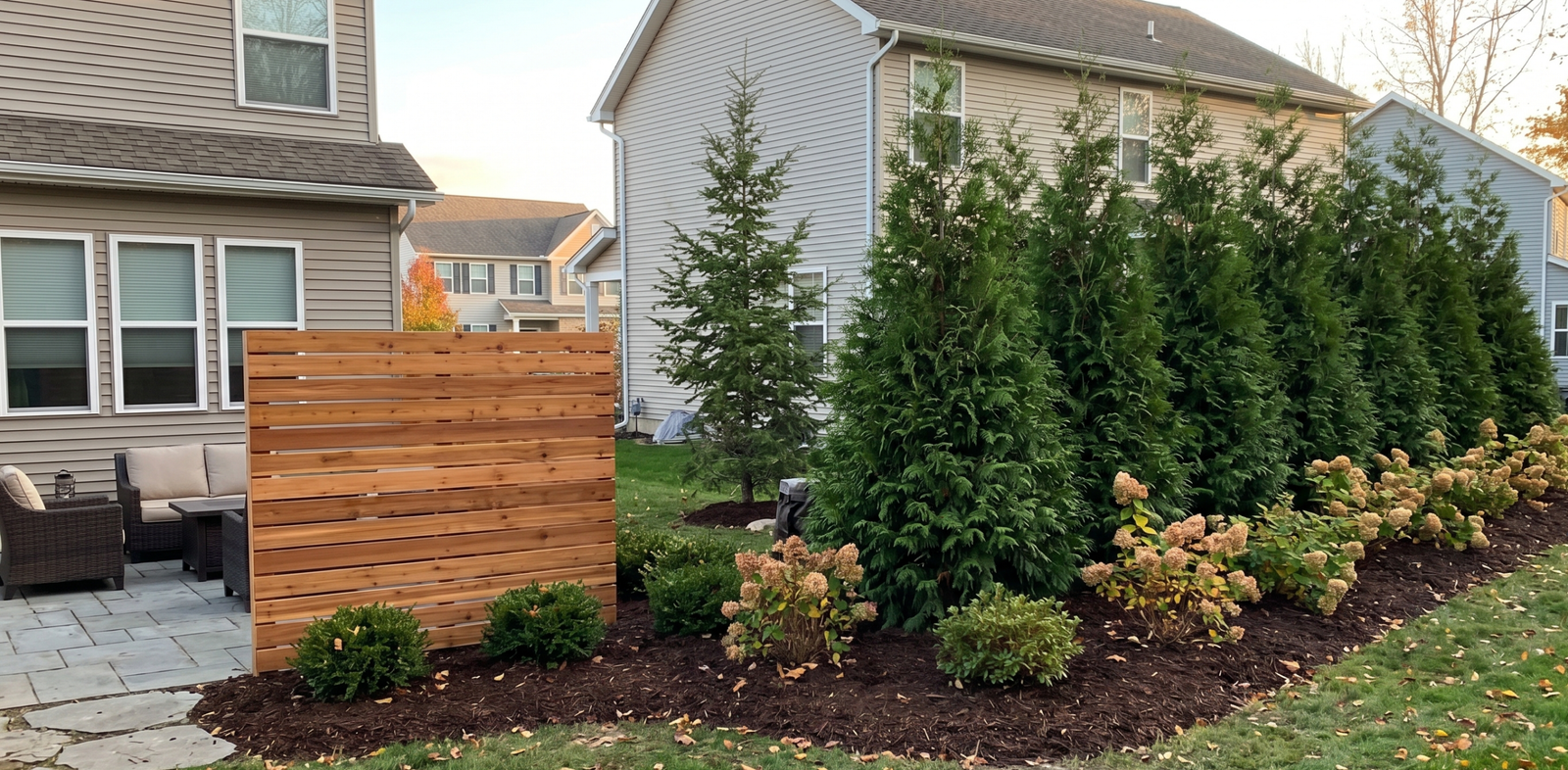
A single row of identical evergreens can sometimes look monotonous. Experienced local landscape designers often recommend a layered or “staggered” planting strategy. By blending evergreens, deciduous flowering shrubs, and ornamental trees, you create a natural woodland border that provides privacy while changing beautifully with the seasons.
| Plant Type | Recommended Species | Primary Function | Seasonal Highlight |
| Evergreen Anchor | Norway Spruce or Green Giant | Year-round windbreak and baseline privacy | Rich green backdrop in winter |
| Mid-Story Flowering | Limelight Hydrangea or Viburnum | Breaks up the green wall; blocks eye-level sightlines | Massive summer blooms and deep autumn foliage |
| Understory / Accent | Bloodgood Japanese Maple or Dogwood | Adds depth, texture, and structural interest | Striking spring flowers and vibrant fall colors |
Frequently Asked Questions
Q: Do deciduous shrubs provide any privacy during winter when they lose their leaves? A: While they don’t block sightlines 100% in winter, dense, multi-stemmed shrubs like Viburnum or Dogwood still create a powerful visual blur. When layered in front of evergreens, they provide year-round screening while shifting colors creatively across seasons.
Q: How much depth does a layered privacy border require? A: A proper three-layer staggered border typically requires a landscape bed that is at least 10 to 15 feet deep to allow all the plants room to reach their mature widths without choking each other out.
4. Hardscape & Structural Privacy Enhancements
Sometimes, biological screens take too long to grow, or a tight property boundary requires immediate, space-saving structural intervention. Combining hardscape elements with plant life provides the best of both worlds.
Custom Horizontal Cedar Screens
Traditional vertical fences can feel restrictive and commercial. Custom-built horizontal cedar screens offer a modern, architectural alternative. By spacing the cedar slats slightly apart (1/4-inch to 1/2-inch gaps), you allow airflow and dappled light to pass through. This keeps the structure feeling open and airy while completely obscuring the view from neighboring patios.
Timber Pergolas with Living Drapery
If your primary goal is blocking the view from a neighbor’s second-storey window down onto your patio or outdoor kitchen, a vertical fence won’t help. A heavy timber pergola provides overhead architectural privacy. Training native, non-invasive climbing vines like American wisteria or climbing hydrangeas over the rafters create a lush, living ceiling that blocks overhead sightlines throughout the outdoor living season.
Frequently Asked Questions
Q: Does Clarence require a permit for building a pergola or privacy screen? A: Yes, structural installations like pergolas, pavilions, or detached privacy screens over a certain height typically require a building permit from the Town of Clarence Building Department. Always submit your plans before starting construction.
Q: What is the best wood for a custom privacy screen in Western New York weather? A: Western Red Cedar and treated Select Pressure-Treated Lumber are the most popular choices. Cedar naturally resists rotting and insects, making it perfectly suited for our damp springs and freezing winters.
5. Navigating Clarence Zoning & Town Codes
Before breaking ground on any privacy installation, you must ensure your project complies with the Town of Clarence zoning regulations. Mistakes here can result in costly modifications or code enforcement fines.
Key structural regulations to keep in mind include:
- Height Restrictions: In most residential districts in Clarence, standard backyard privacy fences are capped at a maximum height of 6 feet. Front yard fences face much stricter limits, typically capped at 3 to 4 feet depending on the setback from the road.
- The “Good Side” Rule: If you install a structural wood or vinyl fence, town ordinances require the finished, attractive side to face outward toward your neighbors or the street. The structural framing must face inward toward your property.
- Property Line Setbacks: While living screens can generally be planted close to property lines, you must factor in the mature width of the plants. If a branch overhangs a neighbor’s property, they have the legal right to trim it back to the property line, which can ruin the symmetry of your privacy wall.
- HOA Rules: Neighborhoods like Spaulding Green or Loch Lea often have independent Homeowners Association (HOA) covenants that are far more restrictive than town codes, dictate specific materials, and require formal architectural review board approval.
Frequently Asked Questions
Q: Can a living evergreen screen be higher than the 6-foot fence limit in Clarence? A: Yes. Natural hedges, trees, and living screens are generally exempted from structural fence height restrictions. This is why planting mature evergreens is the ultimate loophole for blocking views from tall, two-story neighboring houses.
Q: What happens if my privacy plants grow over the property line? A: Under New York State property laws, neighbors have the right to trim encroaching branches or roots up to the exact property line, as long as the trimming doesn’t completely destroy or kill the plant. It’s always best to plant with mature sizes in mind.
6. Maintenance Strategies for Long-Lasting Privacy
A privacy screen is a long-term investment. Protecting that investment requires dedicated care, particularly during the transition from autumn into Western New York’s harsh winters.
Irrigation & Establishment
Evergreens transpire (lose moisture through their needles) all winter long. If they go into freezing weather dehydrated, they will suffer from winter burn—turning brown and brittle by spring. Installing a dedicated drip irrigation system ensures deep, targeted root watering throughout the summer and fall, helping the root systems establish securely in tough Clarence clay.
Deer Protection
During late fall and winter, food sources thin out, and local white-tailed deer will aggressively forage on suburban landscaping. Applying professional-grade, weather-resistant taste and scent repellents starting in October is vital for vulnerable plants like arborvitae and yews. Physical burlap wrapping can also shield younger plants from both deer browsing and drying winter winds.
Frequently Asked Questions
Q: When is the best time of year to prune a living evergreen screen? A: Early spring, just before the new growth begins, is the ideal time to prune or shape most privacy evergreens. Avoid heavy pruning late in the summer, as this encourages tender new growth that will easily freeze and die during winter.
Q: How long does it take for a living screen to provide total privacy? A: Depending on the starting size of the plants and the species, a fast-growing living screen (like Green Giants) typically takes 2 to 4 years to knit together into a solid, unyielding privacy barrier.
7. Looking for Premier Privacy Landscaping Near Me?
If you are hunting for dependable landscape design and structural screen installation near me in Erie County, you need a local team that knows the native New York soil profiles inside out. We routinely transform backyards right here in the community, ensuring every planting layout respects both local town ordinances and tough winter weather patterns.
Our local service area directly encompasses the following neighboring residential communities:
- Clarence Center & Harris Hill: Providing specialized drainage fixes and structural cedar screens for tightly set suburban parcels.
- Amherst & Williamsville: Constructing deep, staggered multi-tier privacy borders that offer year-round protection from high-traffic roadways.
- East Amherst & Millersport: Installing custom timber pergolas and large evergreens optimised for heavy clay layouts.
Frequently Asked Questions
Q: How far do you travel for residential landscape assessments near me? A: Our primary service vehicles operate directly throughout Clarence, Williamsville, Amherst, and the immediate surrounding Western New York towns to ensure prompt, on-site care.
Q: Do you handle the town building permit process for local backyard projects? A: Yes. We manage the structural landscape blueprints and zoning submissions directly through local town offices so your project remains fully compliant from day one.
Our Location & Local Service Hub
To see real, local examples of privacy plantings we have installed throughout Erie County, or to plan an on-site design consultation for your property, visit our local operations hub below.