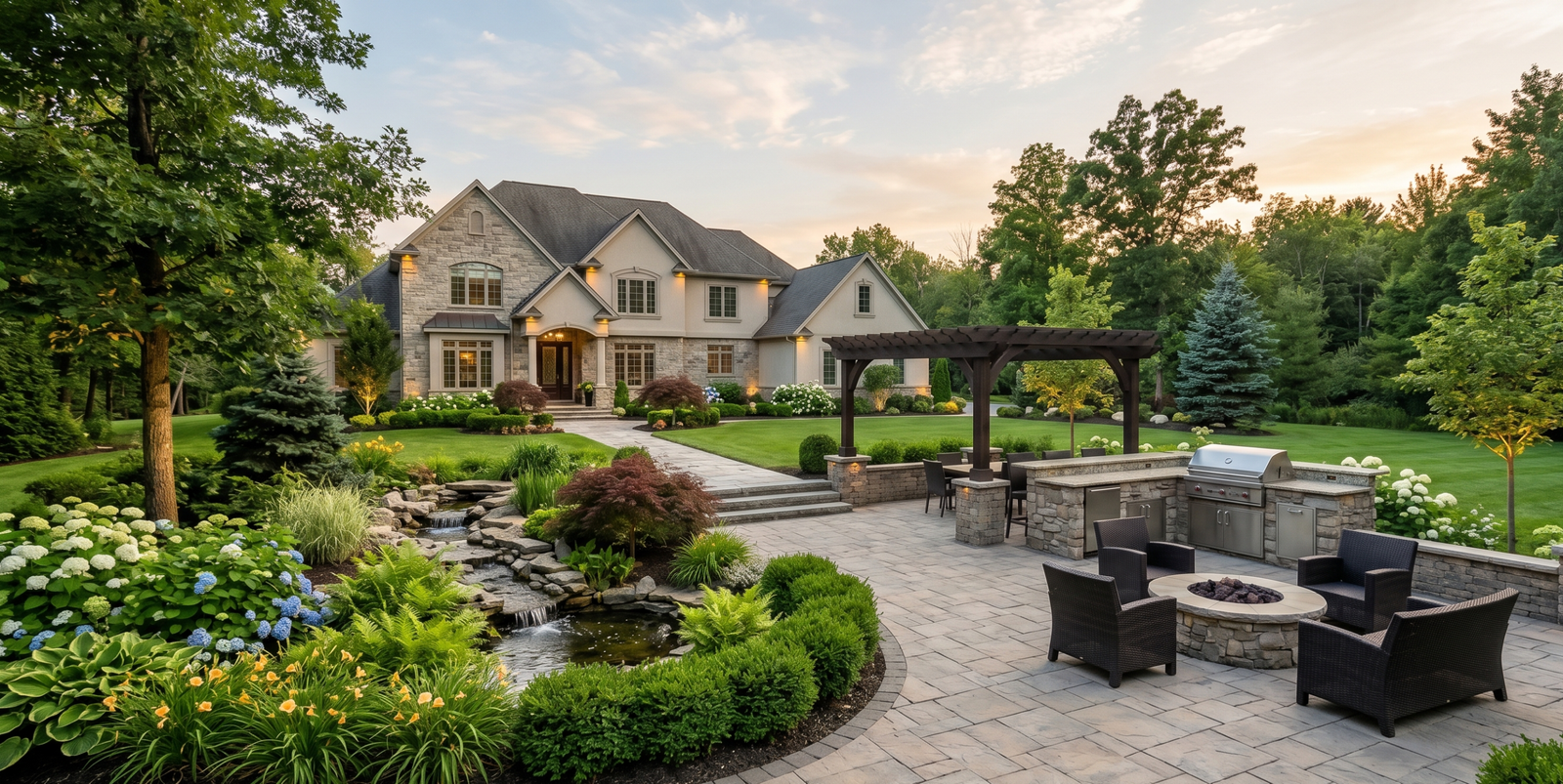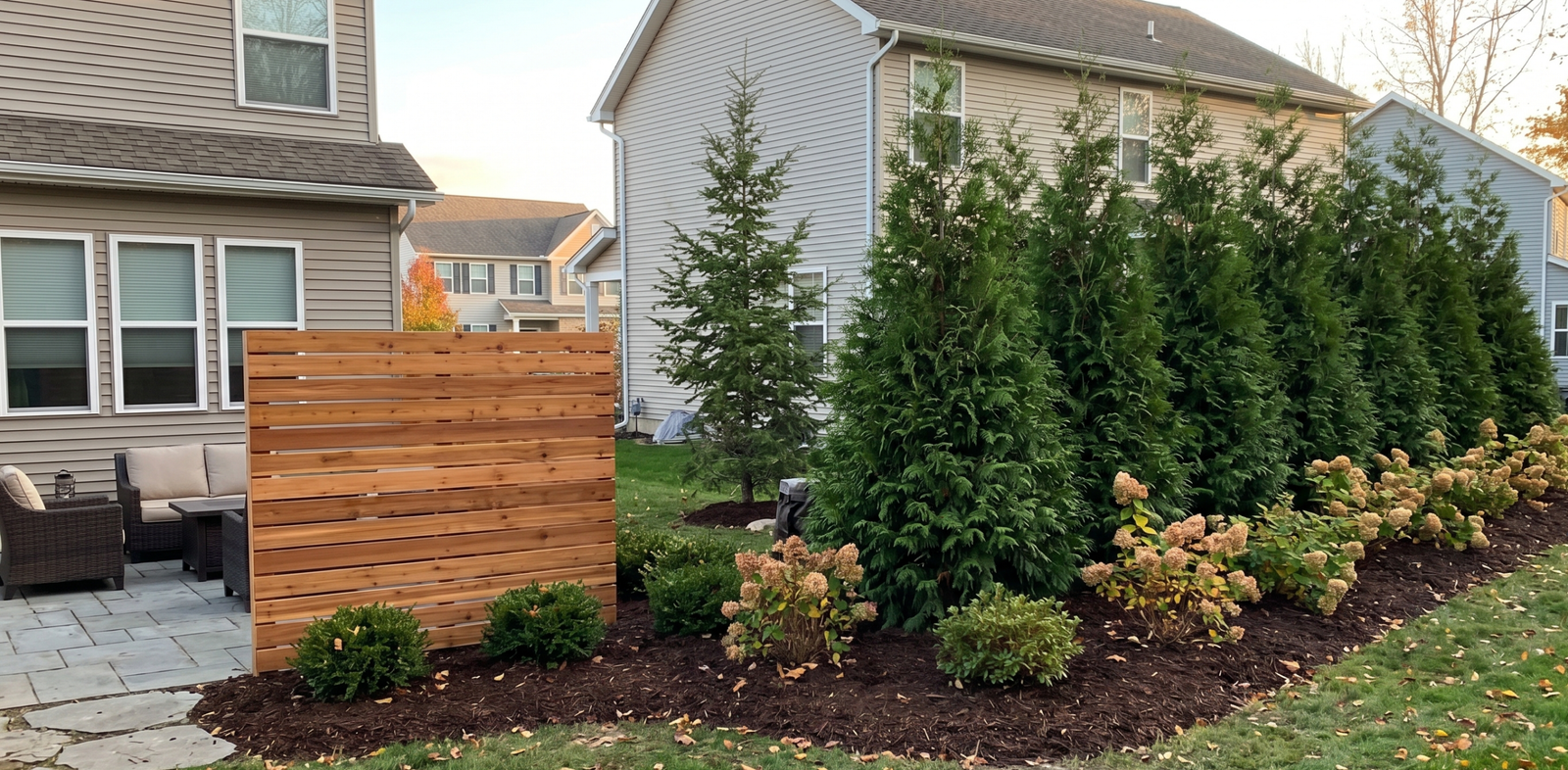

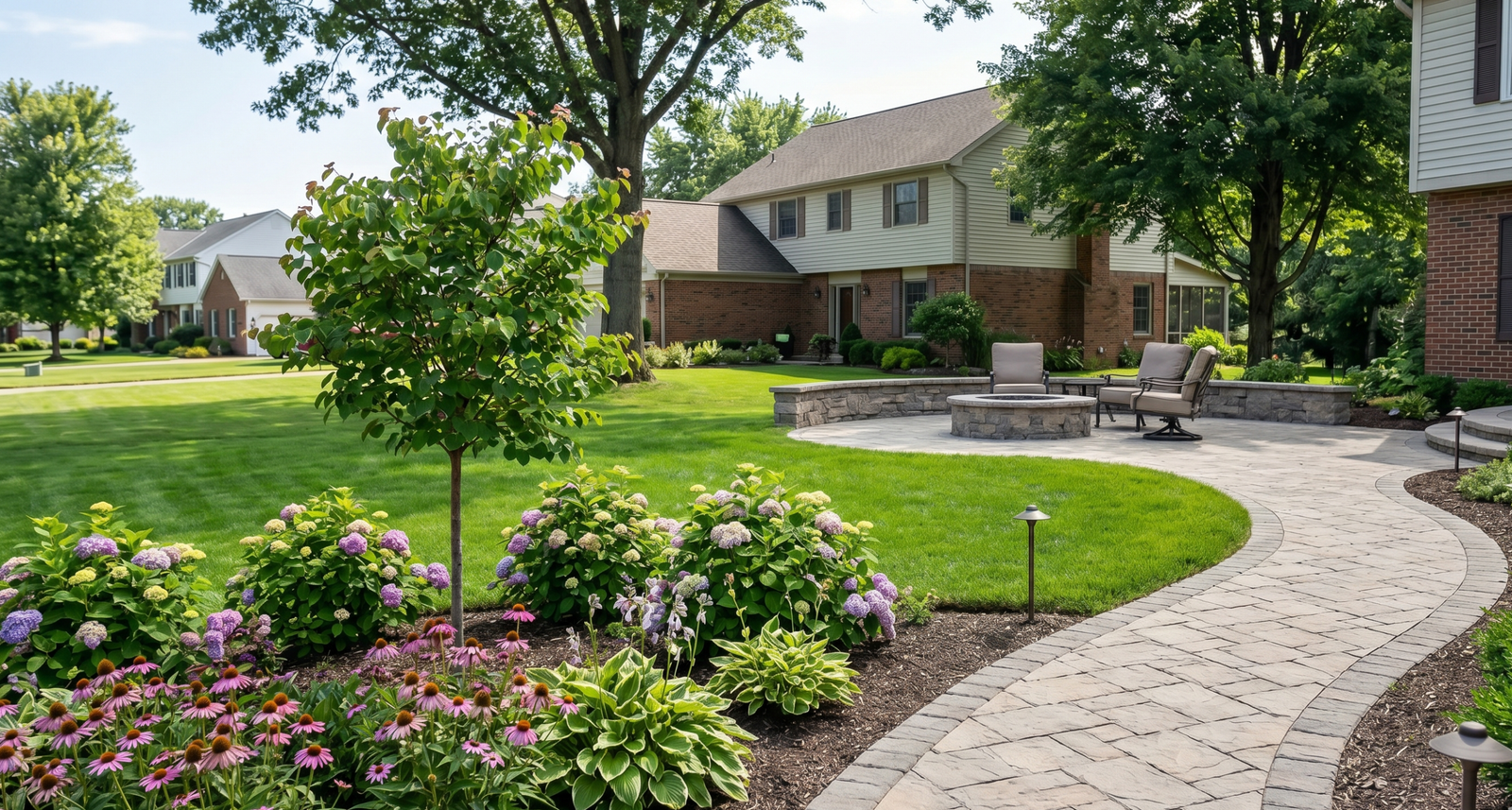
Investing in your property’s outdoor space is one of the most rewarding decisions you can make as a homeowner in Erie County. Whether you are aiming to install a pristine paver patio for summer gatherings or looking to overhaul your front yard turf, a thoughtful design can completely transform how you live. To help you navigate our region’s distinct climate, soil conditions, and local regulations, we have put together The Complete Homeowner’s Guide to Landscaping in Clarence, built with the exact regional expertise required to make your property thrive.
A beautiful yard doesn’t just happen by accident. In Western New York, creating an outdoor space that looks great year-round takes a blend of local knowledge, architectural strategy, and an understanding of the regional environment. Let’s break down exactly what it takes to build an enduring, beautiful landscape right here in Clarence.
1. Understanding the Clarence Environment: Climate & Soil
Successful landscaping begins right under your feet. Clarence features varied terrain, ranging from the limestone-heavy soils along the Clarence Escarpment to dense, moisture-retaining clay closer to Transit Road and the surrounding southern valleys.
[Soil Test / Site Evaluation] ➔ [Drainage Infrastructure] ➔ [Plant Selection] ➔ [Installation]
Navigating the Hardiness Zone
Clarence rests comfortably within USDA Hardiness Zone 6a. This means our landscapes experience freezing, snow-heavy winters shaped by lake-effect weather and humid, warm summers. When choosing trees, shrubs, and perennials, you must verify that they are rated for Zone 6 or lower to guarantee they survive the Western New York winter drop.
The Great Drainage Battle
Because of the heavy clay distributions across many local neighborhoods, drainage is often the biggest hurdle for homeowners. Poorly managed runoff leads to pooling water, soggy lawns, and drowned root systems (root rot).
Before planting a single flower or laying sod, inspect how rainwater moves across your property. Incorporating a functional drainage strategy—such as sub-surface French drains, catch basins, or strategically placed rain gardens—will protect both your plant roots and your hardscape foundations.
Frequently Asked Questions
Q: How do I know if my Clarence property has clay soil or limestone soil?
A: Properties near the limestone cliffs of the Escarpment often have shallow soil with heavy limestone fragments. Areas further south lean heavily toward dense clay. A simple ribbon test (rolling damp soil in your hands) or a professional core soil test will confirm your exact composition.
Q: What is the best time of year to install drainage systems in Western New York?
A: Late spring through early autumn is ideal. Attempting to excavate for French drains or catch basins in the early spring can ruin your existing turf because the ground is highly saturated and susceptible to severe compaction from heavy machinery.
2. Choosing the Right Plants for Western New York
To ensure your garden thrives with minimal intervention, lean heavily on native and climate-adapted plant species. Native choices naturally tolerate local weather patterns, resist regional pests, and require far less chemical supplementation or heavy watering once established.
Here is a curated selection of highly reliable plants for a Clarence landscape:
| Plant Type | Recommended Species | Best Use / Feature |
| Canopy Trees | Northern Red Oak (Quercus rubra), Sugar Maple | Stunning fall colors, long-term shade |
| Ornamental Trees | Serviceberry, Eastern Redbud | Spring blooms, compact size for front yards |
| Hardy Shrubs | Winterberry (Ilex verticillata), Summersweet | Bright winter berries, moisture-tolerant |
| Perennials | Purple Coneflower, Bee Balm, Joe-Pye Weed | High pollinator value, excellent clay tolerance |
| Ornamental Grasses | Switchgrass (Panicum virgatum) | Adds architectural height, erosion control |
The Layering Strategy
When laying out your garden beds, avoid planting in straight, single lines. Instead, use a structural layering technique:
- The Canopy/Background: Large structural trees and privacy hedges (e.g., Arborvitae or native Viburnums).
- The Mid-Story: Mid-sized flowering shrubs and ornamental grasses that provide texture and changing colors across seasons.
- The Ground Layer: Low-growing perennials and groundcovers that knit the bed together and naturally choke out invasive weeds.
Frequently Asked Questions
Q: Can I grow popular Southern plants like hydrangeas in Clarence?
A: Yes, but selection matters. Standard Hydrangea macrophylla (bigleaf varieties) can struggle with our harsh winters, often losing their flower buds to late frosts. For guaranteed blooms every single year, select hardy Hydrangea paniculata (like Limelight) or Hydrangea arborescens (smooth hydrangea).
Q: How often do I need to water newly installed native plants?
A: While native plants are drought-tolerant once mature, they require consistent watering during their first full growing season. Plan to water them deeply two to three times a week rather than giving them frequent, shallow splashes.
3. High-End Hardscaping: Patios, Walkways, and Walls
A premier outdoor living room relies on the marriage between soft elements (plants and grass) and hard elements (stone, wood, and brick). Hardscaping structures define your functional zones, creating clear spaces for dining, relaxing, or gathering around a fire.
Patios & Walkways
For an enduring surface that withstands the freezing and thawing cycles of our winters, interlocking concrete pavers or natural flagstone are the industry standards.
Unlike poured concrete—which easily cracks under the pressure of shifting winter frost—paver systems use flexible joint sand. This allows the individual stones to shift slightly with the earth and settle back down without losing structural integrity.
+——————————————————-+
| Paver Surface Blocks |
+——————————————————-+
| Polymeric Sand (Flexible Joints) |
+——————————————————-+
| 4″ – 6″ Crushed Angular Stone Base |
+——————————————————-+
| Geotextile Fabric |
+——————————————————-+
| Compacted Subgrade |
+——————————————————-+
Retaining Walls & Accents
If your property has slope variations, a custom segmental block or natural stone retaining wall can reclaim sloped, unusable yard space and convert it into flat, functional tiers. Beyond structural support, low seat walls built around a patio perimeter add built-in seating for guests and define the borders of your outdoor room.
Frequently Asked Questions
Q: Why is polymeric sand used between pavers instead of regular sand?
A: Polymeric sand contains special sweeping additives that activate when wet, locking the sand into a water-resistant, flexible mortar. This keeps water from slipping under the pavers, prevents frost heaving, and stops weeds from taking root in the joints.
Q: Do I need a concrete footing beneath my outdoor retaining wall?
A: For modern segmental block retaining walls, a flexible compacted crushed stone base (typically 6 inches deep) is preferred over rigid concrete. It allows the wall to flex naturally with winter ground movement without cracking the structural components.
4. Local Rules, Regulations, and Permits
You cannot talk about structural improvements in our town without referencing local building codes. The Town of Clarence maintains clear guidelines regarding property modifications to protect local ecosystems, property lines, and storm drainage infrastructure.
- Check the Town Code (Chapter 131): Landscape and Tree Conservation.
Review local ordinances. Clarence has specific protections for specimen-quality trees and strict guidelines regarding clear-cutting or major tree removals on residential properties.
- Determine Setback Rules & Easements: Property boundaries.
Identify where your property lines and utility easements sit. Fences, large retaining walls, and major hardscape structures typically require specific setbacks from your neighbor’s property line.
- Secure Necessary Permits: Town Hall coordination.
Submit your formal design plans to the Clarence Building Department if you are installing structures like decks, covered pavilions, pools, or structural walls over 4 feet tall.
- Call 811 Before Digging: Safety clearance.
Always contact Dig Safely New York at least a few days prior to breaking ground. They will mark underground gas, electric, and water lines to prevent dangerous or costly utility strikes.
Frequently Asked Questions
Q: Do I need a permit for a standard patio or garden bed installation in Clarence?
A: Standard at-grade paver patios and standard garden beds generally do not require a building permit. However, if your project alters your property’s existing drainage flow pattern or includes structures like pergolas, high retaining walls, or outdoor kitchens, a town permit is required.
Q: How close to my property line can I plant a privacy hedge?
A: Living landscape elements like trees and shrubs typically aren’t restricted by strict property setbacks like fences are. However, it is highly recommended to plant them far enough inside your boundary so that their mature width never crosses or hangs over your neighbor’s property line.
5. Maximising curb appeal and Property Value
A well-executed landscape design yields a measurable return on investment, frequently boosting overall property market value while shortening time on the market when it comes time to sell.
Modern Lighting Systems
Don’t let your landscape disappear when the sun goes down. High-quality, low-voltage LED architectural lighting extends the utility of your outdoor spaces long into the evening. Focus on uplighting structural trees, softly illuminating walkway steps for safety, and casting a warm glow across your stone hardscapes.
Fast Track to Green: Sod vs. Hydroseeding
If you are dealing with a patchy lawn or finishing up a major construction project, establishing a healthy turf system is paramount. You have two primary choices:
- Sod Installation: Gives you an “instant lawn.” It is pre-grown, rolled out over pristine topsoil, and provides immediate erosion control and visual impact. It requires a higher upfront investment but establishes itself rapidly.
- Hydroseeding: A process where a slurry of seed, fertiliser, mulch, and water is sprayed over prepared soil. It is incredibly cost-effective for large properties and adapts beautifully to the contours of your yard, though it requires several weeks of careful watering and patience to mature.
Frequently Asked Questions
Q: Is it better to install sod in the heat of mid-summer or wait for autumn?
A: Early autumn (late August through September) or early spring is the best window. Installing sod during a hot July heatwave is possible, but it requires a tremendous amount of daily water to keep the roots from scorching before they bond with the underlying topsoil.
Q: Do low-voltage landscape lighting systems consume a lot of electricity?
A: Not anymore. Modern landscape lighting uses high-efficiency LED fixtures rather than older halogen bulbs. A comprehensive home system often runs on less power than a couple of traditional indoor light bulbs, keeping your utility costs very low.
6. Elite Landscape Design and Care Near Me
When searching for premier landscaping options near me, proximity, precision, and neighborhood alignment are everything. Homeowners across our local communities require a specialized approach to landscape architecture that addresses the localised variations in soil depth, municipal tree ordinances, and microclimates.
Our team serves a wide, dedicated local radius. Whether you are situated right off Main Street, building a custom home near Clarence Center, managing a spacious lawn in Harris Hill, or expanding a historic property down Hunts Corners Road, we deliver localised solutions engineered specifically for your neighbourhood’s unique geographical characteristics.
Frequently Asked Questions
Q: What communities are included within your primary landscape service radius?
A: We provide full design, hardscaping, and installation services throughout the entire town of Clarence, including Clarence Center, Harris Hill, and the surrounding borders of Williamsville, Amherst, and Lancaster.
Q: How does choosing a local team near me impact project execution?
A: A local team knows the exact local soil conditions, maintains deep relationships with regional nurseries, and holds a thorough understanding of the building permits and code variances enforced by the Town of Clarence. This avoids project delays and ensures your plants are perfectly adapted to the local environment.
Partnering with an Expert
Designing a resilient outdoor space takes time, heavy equipment, and a deep appreciation for the natural conditions of Erie County. From understanding the underlying soil chemistry to navigating local codes, working with an experienced professional helps ensure your project avoids common pitfalls and thrives for decades.
If you are ready to stop dreaming about the perfect yard and start building it, our team is right here in the neighborhood. We understand the local terrain, the town regulations, and what it takes to build an outdoor environment that stands the test of time.
Our Main Office & Service Hub: